Kailash Manasarovar Overland Tour
A journey to the Abode of Lord Shiva
☑ Best Price Guaranteed ☑ Fully Protected ☑ Expert Knowledge ☑ Socially Responsible
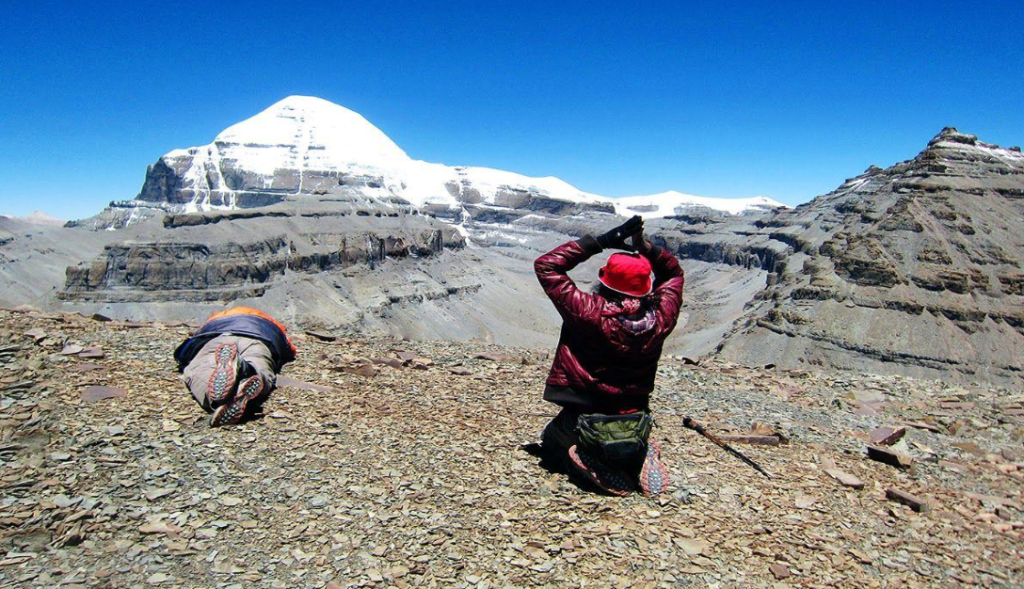
Kailash Yatra by Greenland Holidays is considered to be the classic route of this spiritual trip.
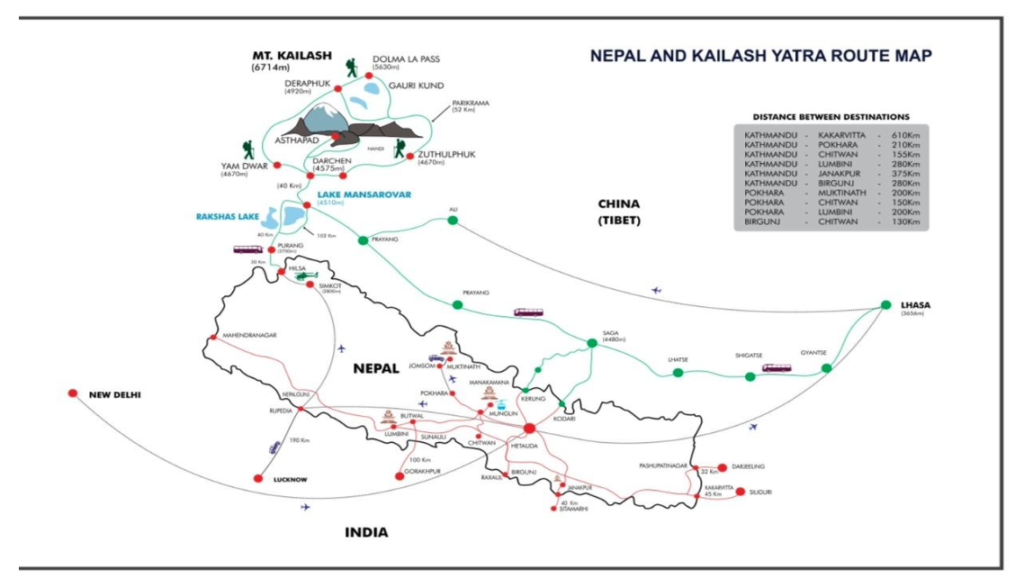
Kailash Yatra by Greenland Holidays is considered to be the classic route of this spiritual trip. Prior to massive devastation earthquake in Nepal held in 2015, this classic popular trip was conducted via Kodari / Zhangmu border. Now being the earthquake damaged badly in this border side, this border was shield by no entry /exit for the people or travelers. Since then, Kailash yatris (pilgrims) choose alternative option to pay homage to their mighty Mt. Kailash via Lhasa or Hilsa border. These two routes become so popular after 2015 for the tourists traveling to Lhasa Tibet & Kailash Manasarovar. After three years, Chinese Government has finally give the good news to all travelers, by opening Kyirong (Kerung) border at north-west of Nepal from November 2017 for all tourists who wish to visit Tibet by overland trip. Kyirong being the alternative border for Kodari Tatopani, we tour operator and travelers feel someway better to organize tours & trekking in Tibet touristic destination among Kailash region. Although Kyirong border is not like comfortable as Kodari, the travelers has at least get choice of little economy trip than of expensive flight option. Tibet Kyirong border is connected with Nepal Rasuwagadhi border through Friendship Bridge. The journey from Kathmandu to Rasuwagadhi border is longer than of Kodari border with little difficult narrow road as well. It takes about 7 to 8 hours to reach Syabrubesi from Kathmandu due to road condition and so we have to stay overnight here. You will notice the strict & numerous checking points while you travel from Kathmandu to border by Police & military of Nepal as you have to pass your journey through Langtang National Park region. Then next morning, we can get entry to Tibet region and stay in Kyirong for two nights in order to acclimatize our health with Tibetan climate. Our program will then proceeds as per itinerary with stunning scenery of mountains, lakes, monasteries, Tibetan local villages, their people & cultures etc. In this Yatra (tour), you will get basic facility for accommodation with dormitory room in all places; however you will get personal care and services by our staff team with family feeling caring and serving hot & delicious foods. The drive journey will be 5 to 7 hours daily during this trip. We will provide comfortable bus for your Yatra. And we do request to our all yatris for their kind co-operation if they find any inconvenient due to unexpected situation during the trip because this trip is anyway not easy trip than other pilgrimage tour due to harsh climate, remote region, basic facility & strict policy of Chinese Government. We tour organizer do our best for your comfort and safety at best possible way making your trip memorable. We hope you will find us as your best travel partner for organizing this lifetime holiest adventure and will remember us always. Hereunder you can go through our detail itinerary for this Kailash Yatra in 2026 and send us your booking at earliest to secure your seat.
Trip Itinerary
Day 01: Arrival in Kathmandu (1300m)
Upon arrival in Kathmandu International airport, you will be greeted and assisted by
our representative after completing your custom formalities,transfer to the hotel
for check-in. Overnight at Kathmandu Hotel.
Yatra Briefing: Before dinner a Short briefing about Kailash Mansarovar Yatra
Accommodation : Hotel Mandala Norling Lord Prime (Twin Sharing)
Day 02 : Kathmandu Temple visit
After breakfast Kathmandu city sightseeing tour, visit Pasupatinath Temple,
Bouddhanath Stupa (World heritage site) ,Jala Narayan Temple(sleeping Vishnu) and
Kathmandu Durbar Squire (Living God Kumari) later drive back to hotel,packing and
preparation of the Yatra. Overnight at Kathmandu.
Accommodation : Hotel Mandala Norling Lord Prime (Twin Sharing)
Day 03 : Kathmandu - Drive to Kyirung(1600 m)
Our representative will pick up you, drive to Kyirung(145 Km ,05/06 Hrs),arrive at
Kyirung transfer to hotel for check in. Overnight at Kyirung Guest house.
Accommodation : Basic Hotel (Shared room, Attached Bathroom)
Day 04 : Kyirung- Drive to Gyirung County(2800m)
After breakfast complete immigration and custom formalities in Nepal and China
both side continue drive to Gyirung(35 Km ,1 Hrs 2800m). Arrive at Gyirung transfer
to hotel for check in. overnight at Gyirung.
Accommodation : Basic Hotel (Shared room, Attached Bathroom)
Day 05 : Gyirung County Acclimatation(2800m)
After breakfast you are free for visit around Gyirung county or shopping . Overnight
at Gyirung County.
Accommodation : Basic Hotel (Shared room, Attached Bathroom)
Day 06 : Gyirung - Drive to Saga (4500M ,270 km 06/07 Hrs)
After breakfast drive to Saga crossing Bramhaputra river(270 km, 6/7 Hrs),Arrive at
Sanga transfer to hotel for check in. Overnight at Saga hotel.
Accommodation : Hotel Basis(Shared room, Attached Bathroom)
Day 07 : Saga - Drive to Mansarovar (4550M ,470 km 08/09 Hrs)
After breakfast drive towards Mansarovar lake (470 Km, 08/09 Hrs),Arrive at
Mansarovar lake transfer to guest house for check in .Overnight at Mansarovar lake.
Accommodation : Pramath Asram (Dormitory room, Common Bathroom)
Day 08 : Mansarovar Parikrama - Drive to Darchen (4600 m)
After breakfast Parikrma of Mansarovar lake by vehicle (102 Km,3 Hrs) take Holy
bath, Perform Puja(prayer ritual, Homa at Mansarovar lake, continue drive to
Darchen (58 Km ,1.5 Hrs).Arrive at Darchen transfer to hotel for check in. overnight
at Darchen.
Accommodation : Basic hotel (Dormitory room, Common Bathroom)
Day 09 : Darchen Darshan Yamdwar - Trek to Diraphuk (4860m, 12 Km - First Day of Kora )
After breakfast short drive to Yamddwar, visit Yama Dwar.This is starting point of
Kora.We will trek to Diraphuk which is 12 km trek (7/8 Hrs) crossing west face of
Mt.Kailash,You will visit North face of Mt.Kailash. Arrive at Diraphuk transfer to hotel
for check in. Overnight at Diraphuk. Overnight at a Hotel in Diraphuk.
Accommodation : Basic Hotel(Dormitory room, Common Bathroom)
Day 10 : Diraphuk - Trek to Zutalphuk (4600M,22 Km - 2nd day of Kora)
After breakfast trek to Dolma – La Pass and proceed to Zutalphuk(22 Km,12 hrs Trek).
This is the most difficult journey throughout the the Yatra since you have to trek up
to (5630m) height. From decent to Gaurikund and trek to Zutulphuk following river.
Arrive at Zutalphuk transfer, check in to hotel. overnight at Zutalphuk at Huest
house.
Note: If you are not doing Parikrma, then you will be trek back to Darchen till
Parikrma finished.
Day 11 : Zutalphuk - Trek to Darchen(08 Km, 03 Hrs) - Drive to Saga (4500M - 3rd day of Kora)
After breakfast short trek( 8 Km,2 Hrs) and reach to the point where our coach will
be waiting and we will drive to Darchen and merge with other member who were
waiting and drive to Saga. Arrive at saga transfer to hotel for check in.overnight at saga.
Accommodation : Hotel Basis(Shared room, Attached Bathroom)
Day 12 : Saga - Drive to Gyirung County(2800M ,270 Km,07 Hrs)
After breakfast drive to Gyirung(270 km, 7 hrs). Arrive at Gyirung transfer to hotel
for check in. Overnight at Gyirung.
Accommodation : Basic Hotel(Shared room, Attached Bathroom)
Day 13 : Gyirung County - Drive to Kathmandu (1300 M, 200 Km 08 Hrs))
After breakfast drive to Kathmandu crossing Nepal – China both side Border
formalities continue drive to Kathmandu arrive at Kathmandu transfer to hotel for
check in.Overnight at Kathmandu.
Accommodation : Hotel Mandala Norling Lord Prime (Twin Sharing)
Day 14: Kathmandu departure transfer
After breakfast we will be provide appreciation certificate of Kailash Mansarovar
Yatra later drop to airport for final departure.
Required Documents for Kailash Yatra
Necessary Document Information
– Passport valid for at least 6 months
– Age Bar 69 years running age*applicable for Indian Citizens
– Scan Passport Xerox copy should be reached Head office, Kathmandu prior 45 Days.
– Original passport should be reached 25 days prior to the Yatra at Delhi Office
Mode of Payments
Details of Payments
– 25% of the total cost should be paid for booking the Yatra
– Full payment should be made before 15 Days of departure date to Kailash
Mansarovar Yatra
Yatra Policies
Cancellation Policy
– All notice of cancellation must be sent to our office in written
– Verbal cancellations will not be entertained
– 45 days before Yatra departure date, 25% of total Yatra cost will be deducted
– 30 days before Yatra departure date, 50% of total Yatra cost will be deducted
– There will be no refund at all if you cancel the Yatra less than 15 days before the
departure date
Terms & Conditions
These booking Terms and conditions contain important information. It is essential
that you read them carefully and understand them as they apply to all services
provided by the Company.
Travel Insurance
We advise you to purchase comprehensive travel insurance package against medical,
nature calamity, helicopter evacuation, personal accident and cancellation etc. we
do not have any insurance policies we sell but it is available from India base
insurance company.
Changes By You
If you wish to change your tour, you must inform our staff at least 30 days before the
tour. Any extra charge or loss incurred due to such change will be borne by you.
Cancellation By The Company
We may be obliged to cancel your trip by reasons like border closed, permit not
issued or cancelled by the government, war, riots, civil disturbances, strikes, natural
disasters, terrorist activities or threat of such and closure of airport etc. Under such
circumstance, we will advise you as soon as possible if we can offer you an
alternative trip of comparable standard or make a refund of the money paid to us
after deducting the expenses that was spent to make the bookings of the flights,
visas, permits, hotels and vehicle booking. A clear bill of the expenses will be
provided to you so that you will be able to claim the insurance. However, we can be
under no other liability to you in such cases. Sometimes Chinese government
personnel will refuse to give you entry even if you have permit if they think you are
not eligible based on their criteria. Please do not start your journey until you get
confirmation of permit.
INR Price
230000
per person
Cost Includes
– Traditional welcome on arrival
– 03 Night accommodation at Kathmandu on sharing Twin/Double basis (03 Star
Premium)
– 01 Night accommodation at Kyirung on sharing basis (Guest House)
– 08 Night accommodation in Tibet on sharing basis (Hotels and Guest houses)
– Tibet travel Permit & Visa fees
– Langtang National Park fee
– English speaking Tibetan guide for customers formalities
– Nepali Supporting Staff(cook,Sherpa & helper) 5:1 basis
– Buffet vegetarian meals during Yatra on AP basis(Breakfast,Lunch & Dinner)
– Nepali experienced Team Leader/Guide during Yatra
– Supporting truck to carry equipment
– Mansarovar and Kailash Yatra Permit fees
– Duffel bag for carrying goods during Yatra
– Back pack bag for personal items to carry and Cap
– Warm down Jacket refundable
– First aid medical kit bag & Oxygen cylinder
– Emergency evacuation management during Yatra
– Round trip transportation in Tibet AC Luxury coach
– Kathmandu – Rasuwagadi – Kathmandu Non ac Vehicle
– Arrival and departure transfer with assistance by A/C Vehicle
– All sightseeing and excursions as mentioned in the itinerary.
– Vehicles are not to be at disposal and are available as per itinerary only (point to
point basis).
– Kailash Yatra appreciation certificate
Cost Excludes
– Personal expenses and travel Insurance
– Medical expenses and Emergency rescue evacuation expenses
– Horses,Pony and porter during Kailash Parikrama
– Tips for Guide, Porter, driver and personal expenses
– Extra Hotel charges in Kathmandu if early return from Tibet
– Any additional cost due to natural calamities and unforeseen circumstances
– Visa splitting charge and extra transportation cost, if returning early from Yatra
– 5 % Vat GST India Government
Trip Overview
-
Duration:
13 Night/14 Days -
Starting & End Point:
Kathmandu -
Trip Grade:
Moderate -
Trip Destination:
Nepal & Kailash (Tibet) -
Entry / Exit Point:
Kyirong -
Maximum Altitude:
5630 M -
Temperature:
Max 20°C to Min - 10°C -
Group Size:
25 People Or Above -
Mode Of Trekking / Tour:
Tea House/Lodge -
Driving Hour:
Approx 5-7 Hours -
Trekking Hour:
5 To 8 Hours -
Trip Type:
Pilgrimage & Adventure -
Best Season:
May to October -
Parikrama of Kailash:
52 Km -
Parikrama by walk:
42 Km in three days -
Distance From KTM:
1050 KM (one way) -
Parikrama of Manasarovar Lake:
102 Km -
Climate:
Unpredictable
Trip Info
Nepal Information
About Nepal:- Nepal at a Glance
Area : 147,181 sq. km
Geography : Situated between China in the North and India in the South, East & West.
Capital city : Kathmandu (population 1,622,000) as of 2024
Population : approx. 31,265,582 as of 2024
Language : Nepali is the national language. However, travel trade people understand and speak English, French, Chinese language as well.
Currency : NPR (Nepali Rupees)
Time zone : (GMT+05:45) Kathmandu
Electricity : Type C (European 2-pin) & Type D (Old British or Indian 3-pin)
Dialing code : +977 or 00977
People : Nepal has more than 101 ethnic group and 92 spoken languages.
Political System : Federal Democratic Republic of Nepal
Geography and Climate
Nepal is landlocked country; it doesn’t touch any sea or ocean. It is Himalayan kingdom consists of eight highest peak of the world and numerous high peaks over 6,000 m high. Geographically, it is situated at south east of Asia sharing its border with China in north & with India to east, west & south. Nepal covers 1,47,181 sq km surface land, which is approx 0.3% of Asia continent. It lies between the latitude of 26’ 22’ and 30’ 27’ North and the longitude of 80’ 4’ and 88’ 12’ East.
The country divided into three regions with Himalayas region in the northern region & Hilly region in Central and Terai as plain land in south. Himalaya region covers 15% of total land area dominated by snow capped mountains. Hills are featured with forests and terrace land covering 68% of total land surface. Terai is plain flat land famous for agriculture due to fertile soil and plain surface which cover 17% of total land area. Kathmandu lies in hilly region with located centrally is the capital of country and one of big city with all infrastructure facilities and densely populated. However, most of people in Nepal are rural-dwellers with small towns nearby their village.
Best time to visit Nepal
Generally, all season is suitable to visit Nepal. Nepal has primarily moderate climate with tropical & alpine region in accordance with geographical features. The weather will be severe cold in winter & cool in summer in North region at Himalayas and tropical in summer & mild in winter in southern region of Nepal. Nepal has spring, summer, monsoon; autumn & winter are as major five seasons.
Being Nepal has most of region with trekking areas, the best period to visit Nepal especially with trekking program are on Autumn & Spring.
Being the roads & trekking trails become wet and humid, the monsoon that hits from June through August is not consider to be best time for trekking while you can travel for leisure tours visiting around popular historical & monuments destinations as well as trekkers can manage your trekking trip to north western part of Nepal at Mustang region as it is rain shadow area and July / August is the best to explore this region. September through November is one of the best time being clear sky, lush vegetation, superb Himalayas scenery, suitable climate with warm day & chill nights. The winter starts through December to February with dry & freezing temperature depending upon high altitude. However, one can travel for tours & also for trekking in some extent of reasonable high regions. March through May called to be spring is another best time to enjoy your visit Nepal due to beautiful Rhododendrons & many orchids, with clear sky to see incredible nature beauty along with panoramic High Himalayas.
People, Religion, Language, Culture and Customs
The total population of Nepal is estimated about 29.50 million as per survey done by Central Bureau of Statistics, Nepal.
There are about 101 different ethnic groups with different castes speaking more than 92 different languages & dialects in our country. Nepali is the official language of the nation and written in Devanagiri script. And it speaks & understood by Nepalese people in majority, however, the tone of speaking may be vary. Besides that many different mother tongues are spoken as per different ethnic groups and castes. English language is also spoken in institute, business organization and tourism related industry.
You can find wide range of diversity of religion with different traditional and customs carry out. In respect to religion, Hinduism is the dominant religion of Nepal and it follows by Buddhism as another major religion of the country. Besides these, you can also find numerous populations following Muslims & Christian religion.
The customs and cultures will be vary from one ethnic group to another and even within same castes or religion due to different geographical locations settlements and also influences of third country customs. Moreover, Nepal becomes secular religion state with freedom to choose their own religion as per individual comfortable according to the new policy decided by this new constitution of Democratic Republic country.
Foreign tourists with different religion other than Hindus are not allow to enter inside some of major Hindu temples but you can observe freely from its surrounding territory surface. Nepal has custom of entering temple and home removing shoes outside its door. Even leather products are prohibited to carry inside temple or monuments of Hindus & Buddhists and you should remember to walk clockwise around stupas or chortens or temples. Local people normally share respect to each other with greetings of Namaste.
Eating and drinking
Normally people all over the world love to experience the food of different countries where people travelled. It is also the best way to experience a country having taste of its unique meal. Eating & drinking in Nepal is reasonable to all with variety of options to taste the food whether it is street fast-food or local restaurants or decent cafe or lavish decorated meals in star hotel or banquet, you will love and enjoy your meals. Nepali dishes are tasty and less spicy compare to Indian meals. As well as, you will find Nepalese food more alike as influence of Tibetan, Chinese & Indian style with its own unique flavour of taste. While you are in Nepal, you can enjoy some of these must eat & drink menu like
Mo:Mo (steamed dumplings in different flavour & style),
Thakali set [the typical set of Nepali daily meals consists of rice, dal (lentils soup), tarkari (veg curry), achar (spices), masu (the meat curry with different choice of chicken, mutton, fish, buff, pork, boar), papad, vegetable salad and curd]
Aila (the Nepali typical wine produce in home with the flavour of rice, millet, wheat)
Shopping
Shopping loves everyone and especially if you are out of your town or country. People love to carry some of souvenirs or typical stuffs for their memory of their visit in certain destinations. For those shoppers, you will find great value of things to buy and many options offering unique products related to art & architecture, pashmina, most hardwork arts of Thanka, hand knitted Nepali carpets, wooden & metals works, pottery and many more. Moreover, you will find all these with variety of options buying them in cheaper to expensive prices as per their quality. You can find many local markets from footpath shops to branded malls with colourful decoration in all. Besides souvenir, travellers fun to shop cheaper fancy products as well. Moreover, people wish to carry Nepali tea and other herbal products.
And after all, you also have to ensure with your local customs & quarantine formalities to carry such products allow or not back to your country. Some of nations have strict policy on customs which makes trouble later.
Festivals & Holidays in Nepal
Nepal celebrates many festivals as it occurs like once or twice in a month. Nepal is rich in culture & religion with different ethnic groups so they perform different separate local festivals among which some of them are national festivals and events with official holidays. Festivals are normally determined and celebrated as per lunar calendar.
Government office hours run through 10 am to 05 am and working days are Sunday through Friday. Saturday is weekend holiday and normally all government offices, private organization, banks & embassy remain closed. Embassies or any other International associates are also remain closed for Saturday & Sunday as well. Nowadays, most of banks are open all days with half day operation on weekend holiday & festival holidays. Hereunder you can see some of specialized festivals that celebrated throughout nation and visitors will also keep interested.
Dashain:
One of Nepal’s biggest festivals celebrates by all Hindus & some of Buddhist religion also. This is festival is last for 15 days long and all government offices & private business offices are closed for a week and schools or colleges are closed 15 days. In this festival, people take blessing from their parents or elders with Jamara and Tika. This festival is represent to the Goddess Durga and worship her being victory over devils. During festivals all family members meet together and enjoy the festivals with varieties of delicious foods and flying kites, playing cards or other gambling for fun purpose only.
Tihar:
Tihar is another important big festival of Hindus. It is the festival of lights worshipping Goddess Laxmi, the goddess of wealth, welcoming her to stay in people’s home to bless with happiness, prosperous, wealthy and peace. This festival is celebrated for five days. First day is crow day as it believes crow is a messenger to give us good news, second day is Dog day as it is loyal animal to take care our home and family. We celebrate third day as special day worshipping cow in the morning as cow is like our mother who give us milk to feed and also believe as goddess Laxmi and we worship Goddess in the evening with colourful lights. On fifth day, we worship ox in the morning and it is special day for Newari culture as they worship themselves to their own body assuming the god is live inside all human beings. And final fifth day is very important day of this festival, people celebrate it as brother-sister day where sister worship and pray for long lives of her brother and similarly brother also do same with offering sweets and delicious varieties of food to brother by sister and in return gifts to sister by brothers. During festival, especially children and youths also enjoy festival by playing Deusi Bhailo program (the program with singing & dancing typical songs of festival).
Faagu Poornima (Holi): the festival of colours and water enjoying family, friends & relatives together.
Indra Jatra: the local festival celebrated in Kathmandu with Kumari (the living Goddess) chariot and performing different masked dances.
Losar: Losar festival observed by typical ethnic group of Tibetan origin like Sherpa, Tamang, Gurung, Bhutia as New Year. Lo denote ‘Year’ and Sar represents ‘New’ as per Tibetan language. It is one of significant festival and celebrated in Nepal, Tibet, Bhutan & Sikkim. This festival usually celebrated on February.
Buddha Jayanti: This festival lies around May month and celebrated for paying homage to the birthday of Lord Gautan Buddha who enlightened the world with peace and compassion and thus considered as light of Asia.
Krishna Janmastami: The festival celebrated on the birthday of Lord Krishna who spread love and save earth from devil.
Shiva Ratri: Shiva represents Lord Shiva (Mahadev) and Ratri indicates night so this is the night of Lord Shiva. This festival is one of very important festival for Hindus celebrated on March in different temples of Nepal where Shiva idols located. Among them Pashupatinath Temple is the most sacred temple where people from all over Nepal and India visit to pay homage and blessings from Shiva.
Transport
In Nepal, you will find wide range of transportation services reaching major destinations and remote land of country. You have option of vehicle hiring for individual drive or riding local transport to minimize your budget or say travel more places with minimum budget through local vehicles. Going for vacation means travelling many places as best as possible and enjoy maximum experiencing them. Normally, tourists can get help from their local travel agents for their arrangements of transport to visit their holiday program as per pre-plan & booking. However, some can also get in Nepal without pre-booked of transportation and facilitate through local buses or van or taking taxi or cab.
Accommodation
Nepal facilitates varieties of accommodation with concern to clients’ comfort and budget. You can get easily the suitable room with choices of your kind from budget basic guesthouse room to deluxe International luxury hotel accommodation in major city of tourist destination. Hotels are serving guests with its new modern amenities and availing as much facility in its room services with warm hospitality. Similarly, you can also find clean & comfortable lodges or teahouse in trekking destinations along with luxury accommodation in some of such remote high places as well. Moreover, you will also fascinate by some of unique boutique hotel with traditional design and cultural interior decoration. Besides concrete or wooden building, you can also share your experience relaxing in tented camp while you are in remote area trekking enjoying the countryside beauty.
Responsible Travel
Explore Vacation is responsible organization in regards to its people, community, nation, environment and local cultures & traditions while arranging any kind of tours or trekking activities in Nepal. People from all over the world travel in Nepal for their vacation with different values, intention and thrill. We can find different cultures, language, fashions of travellers and some of which are not appropriate to the people or community of Nepal in some regions. So, we are committed to aware on such inappropriate behaviour to our travellers while travelling on certain regions where travellers should be careful to respect their religion, culture and lifestyle. Hereunder you can find some of responsible tips to be noted while you are in holiday in Himalaya Kingdom Nepal:
1. People of Nepal greets you with Namaste often as for welcome, greeting, meeting up people, respecting elders etc. If you can learn some of local greeting words which are easy to remember will be helpful to make them happy. Like Namaste, Dhanyabad, Mitho Chha, Ramro Chha etc
2. Better to have some basic knowledge on customs, religion, tradition, cultures of Nepal, which will be helpful, while you travelling.
3. Do not speak filthy & rude words.
4. People of Nepal wear simple dress covering their whole body parts especially in village. It will be respect if you wear clothing that covered shoulder to knees at least. However, you can be little casual in city being the people are influence by modern fashion.
5. While entering temple or any religious place, keep shoes off and also take off any leather materials inside.
6. Always get permission to take photos of any people or children and of any idols inside temple or monuments.
7. Keep environment clean. Avoid buying plastic products and even if bought on necessary, dispose it in disposal container including any kind of litter.
8. Do not give money to the street child or beggars, instead you can buy foods or offer clothes. Because with money, they will use it for unhealthy foods & drinks or some even follow bad habits of drugs as well as some of children are utilize by their parents or by some group to make their earning.
9. Try best to buy local products made by local people of Nepal. This will help for their economy growth and also support to preserve some of traditionally related things like handicrafts, metal & wooden crafts, thankas, pottery, arts & architecture, crops, etc.
10. Bring reusable bottle like thermo flask to keep filtered or boiled water and avoid using plastic bottled water which is against environment safe.
11. While you speak with people, keep always smile in your face and be calm, this will brings smile on their face too and you will enjoy your conversation. Even while you bargain in shopping, the smile brings reasonable price.
12. You can find many souvenir products which are made through exploiting or abusing endangered animals so please refrain from supporting to buy such products or business.
13. Do not plug off any plants unnecessarily.
FAQS (Frequently Asked Questions) Of Nepal
Is Nepal safe to visit? Is it safe if a Woman travel alone with your company?
►Yes, of course, Nepal is totally safe to visit on your next holiday or vacation. Nepal is recognized as Peaceful & Independent country by world. Even aftermath of disaster earthquake on April 25, 2015, Nepal is rebuilding and very few insignificant damages has been made and most of 90% destination are still safe and looking forward to welcome more tourists to visit and support for rebuild.
Nepal is safe in all aspects even you as man or woman travelling alone. Travelling with us means total safe and care in your whole trip. We have responsible and highly experience travel chauffeurs who will completely take care you with your safety and making your vacation memorable.
Nepal is popular for its cultural, historical, natures & Himalayas worldwide. Nepal is land of unlimited ventures for all travellers to explore and experience. The country with the eight highest mountain peaks including top peak Mt. Everest, numerous peaks above 6000m high, tempting lushes green vegetation with beautiful crafted terrace and farm lands, the birthplace of enlightened Lord Buddha, the birthplace of Goddess Sita, the dwelling of the biggest Hindu temple of Lord Shiva, Muktinath Temple, the salvation land of Lord Vishnu the habitat of Royal Bengal Tiger, the second highest Bungy Jump, innumerable trekking trials, adrenaline white water rafting and with many more historical & cultural monuments and adventure activities will definitely praises and wishes to be here soon by all travellers from all over the world.
How to get there?
►Nepal is accessible by air and by land. Nepal has broad connection of several international flights from most of big countries of world. Nepal shares its border with India & China so people can reach Nepal through land journey as well. Nepal has direct flight connection with Delhi, Mumbai, Kolkata, Bangalore, Bankok, Hongkong, Lhasa, Guanzhaou, Doha, Abu Dhabi, Malaysia, Dhaka, etc. Different reputed airlines like Jet Air, Air India, Thai Air, Qatar Air, Nepal Airlines, Turkish Airlines, Etihad Air, PIA, Dragon Air, Air China, China Eastern Airlines, China Southern Airlines are some of examples. Similarly, you can enter through border like Sunauli, Bardibas, Birgunj, Kakarvitta, Kodari, Nepalgunj Janakpur etc.
Do visa require travelling Nepal and how is its process?
►Of course, visa is necessary to all foreign nationals except Indian passport holder to enter Nepal. All foreign nationals should bear valid passport with minimum six months validity while travelling abroad.
Indian national require to carry passport or voting card if they are travelling Nepal through air flight; while if they intend to travel through land surface then they can travel with any kind of specific identity issue by Government of India or concerned authorized Government organization like student id card, aadhar card, pan card etc.
Foreign national can obtain Nepal visa with an easy process from local consulates or embassy of Nepal located in your country or you can also granted on arrival visa directly at International airport immigration in Kathmandu or in any border immigration that touches with India & China. You need to carry couple of recent passport size color photo for visa process. You will get multiple entry visa valid for 15 days, 30 days & 40 days with the visa fee of USD 25, USD 40 & USD 100 respectively.
For more comprehensive information on visa issues with extension and other related matters please visit this link website of Nepal Government Department of Immigration: www.immi.gov.np/visa
Will taxi or cab available in the airport to transfer hotel?
►Yes, you can find pre-paid car in the airport at outside of arrival terminal. You have to pay the car fare as allocated for different destination in prepaid taxi service counter and they will provide you the car number & driver for transfer service. And if you are booked with private travel or trekking agents or hotels, normally they will provide you pick up service in the airport.
Those who booked tour package with Explore Vacation will be provided airport pick up & drop services.
Is there any possible to get mobile sim card of Nepal Or will my simcard also works ?
►It is absolutely possible to get new mobile sim card in Kathmandu or in any other cities. Ncell and Nepal Telecom are two renowned tele-operators facilitating us with providing sim card on easy process with same day activation. You need to carry two recent passport size color photo and a copy of your passport. You can even buy sim card on arrival in the airport at arrival terminal.
If you have activated international roaming in your simcard then there is possible to get connection as network coverage is quite good in urban areas and while there may be poor connection in rural or mountain region.
Is it compulsory to buy travel insurance before I travel Nepal? Can I buy in Nepal?
►That’s absolutely mandatory to secure your vacation with insurance while travelling Nepal or any of other destinations. Due to varies climate, availability of infrastructure, cost factors for rescue or evacuation expenses, treatment expenses are the major part to purchase travel insurance before your start your trip. If we are acknowledges with your travel insurance then we can take necessary steps immediately for rescue or evacuation to save your life. Especially for those travelling in trekking, climbing/expeditions or any other adventure activities you must take full insurance package that covers rescue & evacuation service by helicopter and medical expenses.
How is tipping or gratitude ?
►Generally, tipping is not mandatory in Nepal. Tipping or gratitude rewards is depend on your wish for the services that people received from any of individual or any organization. However, we experience, people in the field work like porter, sherpas, guide, leader, driver keep some expectation from their clients after their laborious dedication at your services. So, if you are happy and satisfy with their services then you can reward them with some tipping as per your own wish by any form whether cash or any material whichever you feel convenient. However, hotel & restaurants normally charge 10% on their service bills so there is not compulsory to tips to hoteliers or restaurant people but even if you feel to tips then it is better to drop it in tips box that goes to all other people in that hotel or in restaurants.
How is communication and Internet access in Nepal?
►Basically, communication is accessible in wide range of Nepal covering all towns & many remote mountainous region as well. In contrary, internet access is limited to specific region like small or big towns and few rural villages or trekking regions.
How is electricity?
►Nepal electricity uses 220-240 voltage and 50 HZ frequency to power their electric appliances and different plugs with type C (European) & type D (Indian). Euro plug has two prongs and Indian plug has three prongs but not flat prongs as found in use in the United States or in other countries. In some countries like USA / Canada uses 110-120 volts & 60 HZ of electricity and if you are taking a hair dryer, electric shaver, laptop etc then it is suggested to carry universal adapter and voltage converter to fix your appliances safe and usable.
Also, Electricity is not often proper in Nepal as it faces load shedding (power outage) for hours daily as per seasonal schedule. So, you can also carry power bank for back up source to charge your important electric accessories as per necessary. However, hotels, restaurants and other business organization keep generators or inverters to back up electricity.
How is ATM facility and will credit card accepted?
►ATM machines are now normally available in most of major towns of Nepal including in some of popular rural village as well. In city like Kathmandu, Pokhara has plenty of ATM machines are available which provided by different Banks.
Nepal normally accepts Visa card, Credit cards, Debit cards, American Express card, Maestro Card, JCB card, UnionPay card, SCT card. Cards are often accepted by hotels, decent restaurants, supermarkets, travel offices, other large business organization, and banks. While local markets, small cafe or restaurants, guesthouses will have difficult to facilitate with accepting cards and even you have to make sure with carrying enough cash while travelling rural areas of Nepal.
How is Toilet facility in Nepal?
►Basically, you will find Indian style squat toilets in Nepal. However, you can find western toilets as well in most of new built houses, hotels, or restaurants. It is advisable to carry own toilet paper, soap, hand sanitizer always while travelling in Nepal because they are not usually provided.
How is daily expenses estimation?
►Normally, your daily expenses will spend for meals, water, tea/coffee. For your basic knowledge on such basic daily expenditure, you can expect below amount:
Cup of Tea: Rs. 50 to 150
Cup of Coffee: Rs. 100 to 200
Simple Breakfast: Rs. 200 to 400
Simple Lunch: Rs. 300 to 500
Simple Dinner: Rs. 400 to 600
Bottle of Beer: Rs. 250 to 400
Bottle of Water: Rs. 30 to 50
Is drinking water safe in Nepal?
►Drinking boil or filter water or mineral bottle water is safe. When you are in trekking trails, you can carry flax bottle or other refillable bottle so that you can refill boil or filter water rather than buying bottled water because
General Info
Important Pre Departure Information Clothings
Casual wears and comfortable walking shoes are the rule of Tibet. Be sure to bring
warm clothing as nights and early mornings can be quite chilly to cold. Indian
Pilgrims are advised strictly not to wear Sari during this yatra. Bring all the film,
medicine, cosmetics, personal toilet items etc. that you will need from home asthese are difficult if not impossible to obtain on the way. A small first aid kit is also a
good idea. Also quite useful is a route map, to know where you are going and have
been each day.
What To Take
Winter wear: Gore-Tex material, though expensive, is highly recommended. Down
jacket, raincoat or windbreakers, thermal under wears, Jackets, warm trousers &
woolen shirts (cotton will also do), warm sweaters, woolen gloves, sun hat,
comfortable shoes, light leather boots in case of snow, woolen balaclava (‘monkey
cap’) & scarf/dust mask to protect your eyes & nose from dust.
Bring With You
You may bring the snacks for along the way such as chocolates, dry fruits, toffees
etc. Strong water bottle & water purifying tablets. Personal medical kit and Diamox
tablet (for high altitude). Sun glasses (to protect your eyes from UV, which is
especially strong in high altitudes).
Sun block or sun screen lotion, wet tissues (Fresh-ones are excellent to wipe off the
dust), clothes-line/clips, needle & thread, body spray (handy for smelly boots/feet
and for a round of spray in the toilet tent!), toilet paper, torch & spare batteries, day
pack (small shoulder bag), Camera & films, Binocular.
Health
This is one of the toughest high altitude road journeys on earth. You Must be
physically fit – no two ways about that. Generally patients with asthma & heart
problems have a problem acclimatizing to high altitudes. In your interests it is
essential you should be examined by your doctor to know about your health
condition and your ability to cope up with the rigors of high altitude travel for days in
‘no road’ conditions, extreme cold, dust, trekking to an altitude of 19500ft during the
Parikrama, etc.
Altitude Sickness
As you are traveling over high terrain, you are likely to experience symptoms and
discomfort of altitude sickness (headache, loss of appetite, nausea, exhaustion,
sleeplessness, breathlessness etc.) until your body adjusts to the elevation. This can
take a couple of days or more depending on an individual. For this reason alone, we
have made it mandatory to stay 2 nights at Mansarovar (4550M) moving on to the
higher altitudes.
Drink plenty of water, be calm, and do not exercise. Do not drink alcohol or smoke
prior to and during the tour. We also recommend you carry a strip of diamox tablets.
We provide Gamow bag (a special equipment to prevent sickness from high altitude) on this tour.
Currency
The unit of Chinese currency is Yuan. USD 1 = 7.02 Yuan &1 Yuan = INR 11.90 approx.
(as of December 2025). Money can be exchanged at Bank of China at Kyirung county.
Exchange all your remaining Yuan at Kyirung county.
Risks & Liability
Company and its associates will put every effort to make your journey smooth and
pleasant. However, all the tours in Tibet are conduct strictly under the rules &
regulation of Tibet Tourism Bureau (TTB). Therefore, Company. and its counterpart
shall not be responsible for any change and alteration in the program due to
unavoidable circumstances such as landslide, road blockage, flood, snow, political
unrest, and cancellation of flight, delay arrival, sickness or accidents. Any extra cost
incurred thereof shall be borne by the clients on the spot.
If you require more information, please do not hesitate to contact us anytime.
Please find the contact details above.